


The lead error of a ball screw is a core parameter affecting transmission accuracy, yet it is often generalized in engineering practice. In fact, lead error consists of two components with entirely different properties. Cumulative error represents the total deviation over the full travel, increasing linearly with stroke length and directly setting the upper limit of positioning accuracy. Adjacent error refers to cycle-by-cycle fluctuations of local lead. Though the deviation per cycle is tiny, it triggers vibration and noise during high-speed operation, severely limiting dynamic performance.
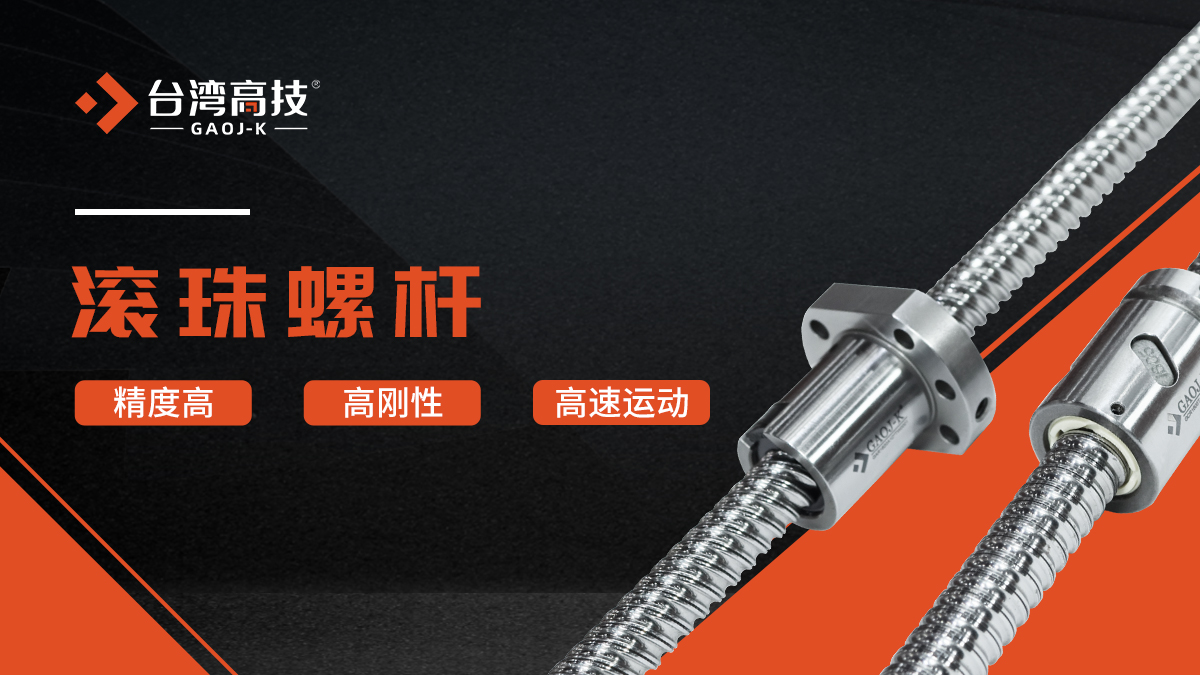
Ball screw cumulative lead error is the superposition of total deviations between the actual nut travel per screw rotation and the theoretical travel across the full stroke. This error expands linearly as travel extends, directly impairing the absolute positioning accuracy of multi-axis linkage machining. The fundamental solution is to measure full-length compensation data with a laser interferometer and optimize pitch compensation parameters.
In terms of adverse impacts, cumulative error mainly damages dimensional consistency of mass-produced parts and repositioning accuracy between stations, which frequently occurs in long-stroke conveying and large CNC equipment. In contrast, adjacent error mostly ruins the micro-morphology of machined surfaces and dynamic tracking accuracy, with prominent negative effects under low-speed heavy cutting or precision indexing scenarios.
For maintenance solutions, cumulative error can be digitally corrected via the pitch error compensation function of CNC systems. However, adjacent error is an inherent rigid index determined by screw manufacturing precision and cannot be eliminated through software compensation. If it exceeds the tolerance standard, the screw must be replaced or its raceway precisely reground. Therefore, equipment designers should clarify whether full-stroke absolute accuracy or local surface finish is prioritized during model selection to control cumulative error and adjacent error respectively.