


Precision equipment operating at high speeds usually generates amplified noise due to vibration coupling between components, and a single support mount can hardly eliminate multi-dimensional vibration forces. Accurate matching design of support mounts can cut off resonance transmission paths at the source of vibration and drastically reduce operating noise. For high-speed low-noise equipment, the core logic of reducing resonance noise via matched support mounts lies in "breaking structural symmetry" and "adding damping coupling".
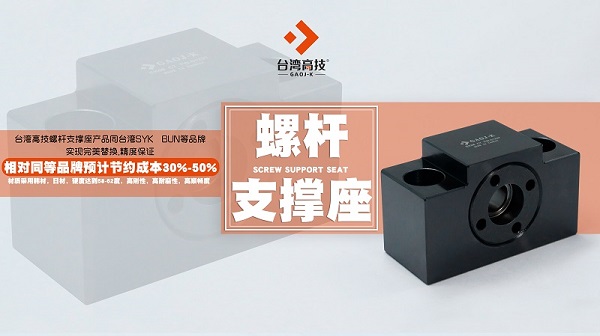
Detailed explanations are as follows:
-
Break frequency degeneracy to prevent energy superposition
When matching support mounts, two mounts with slight differences in geometric shape or mass distribution are deliberately selected. This breaks the symmetry of the equipment support system, splits the originally overlapping natural frequencies into two similar yet distinct frequencies, avoids synchronous superposition of vibration energy at the same frequency point, and reduces the amplitude of resonance peaks fundamentally.
-
-
Generate dynamic vibration absorption effect through matching differences
Adjust the stiffness-mass ratio of the two support mounts to a slight disparity, so they act as the "main system" and "auxiliary vibration absorber" respectively during vibration transmission. When the equipment vibrates, the second matched support mount generates a responsive force with opposite phase, counteracting vibration transmitted by the main mount within partial frequency bands, equivalent to a built-in passive tuned mass damper.
-
-
Build interfacial damping coupling to boost energy dissipation
During matched installation, buffer gaskets of different materials or different preload forces are adopted between the connecting surfaces of the two support mounts and the equipment. When the equipment undergoes bending vibration, the phase difference in responses of the two mounts creates tiny relative sliding at connecting interfaces, converting mechanical energy into heat, greatly raising the system damping ratio and enabling rapid dissipation of vibration energy during resonance instead of continuous amplification.
-
-
-
-
Redistribute modal nodes to avoid sensitive response areasBy adjusting the respective height or installation angle of matched support mounts, the antinode of the equipment’s main vibration mode is forced to shift. The resonance antinode originally located at the center or key working area of the equipment is moved near the support mounts for constrained absorption, lowering the vibration response amplitude of critical equipment parts.
-
Create dual-path vibration shunting to cut transmission efficiency
Matched support mounts provide two transmission paths with different impedances for vibration energy. High-frequency vibration partially counteracts at the equipment base due to phase interference along the two paths, reducing energy reflux transferred to the mounting foundation and preventing a closed vibration circulation loop between the equipment and ground. -
-
Introduce nonlinear stiffness via differentiated preload forces
-
Apply different preload loads to the two matched support mounts to endow the entire support system with nonlinear stiffness characteristics. Such nonlinearity eliminates drastic linear amplitude growth in the resonance region, flattens resonance spikes and broadens resonance bandwidth, so the equipment cannot sustain intense stable resonance at a fixed rotating speed.