


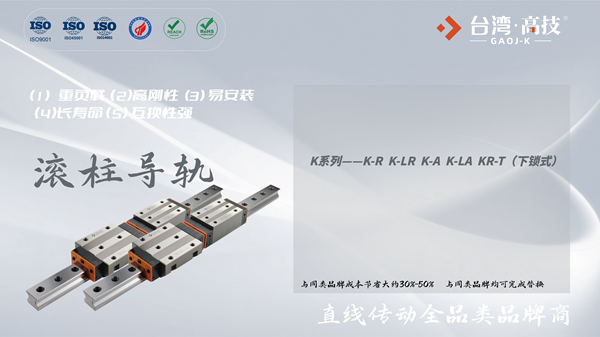
When selecting core moving components for high-end machine tools, high assembly roller linear guides integrate outstanding heavy-load capacity and excellent vibration resistance via their unique structural design, making them the preferred option for numerous machining scenarios. Breaking the performance limits of ordinary guides, they lay a solid foundation for stable machine tool operation.
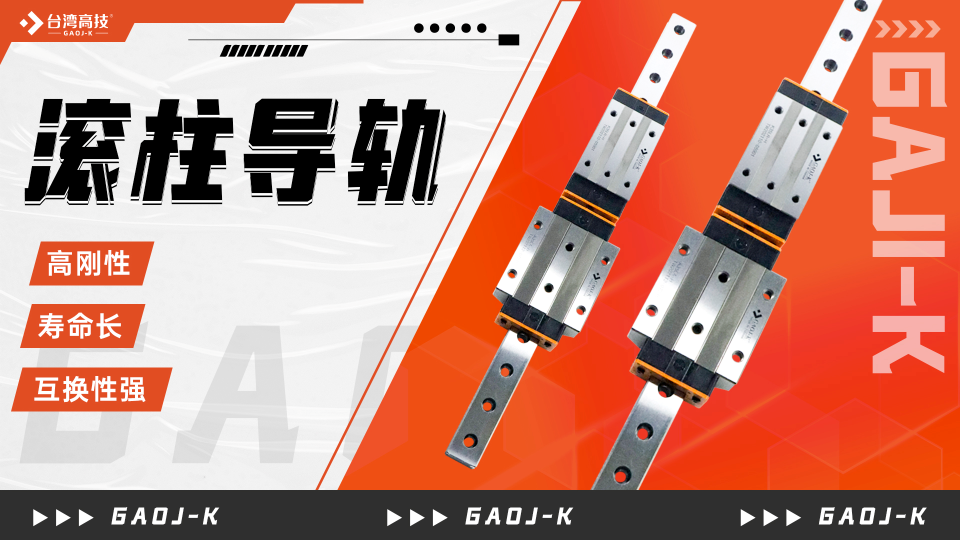
Their key advantages are listed as follows:
-
Revolutionary Contact Structure
Its core merit lies in adopting rollers instead of balls as rolling elements, upgrading traditional point contact to line contact and greatly expanding the load-bearing contact area. This serves as the physical basis for ultra-high rigidity and superior heavy-load capacity.
-
-
Positive Feedback Loop Between Rigidity and Vibration Resistance
Superior rigidity results in minimal elastic deformation of the guide under heavy cutting or impact loads. It effectively suppresses vibration, shortens vibration attenuation time, fundamentally avoids resonance, and ensures smooth machining processes.
-
-
-
-
Four-Directional Equal Load Design for Complex Force Conditions
With rollers arranged at a 45° contact angle, the guide delivers consistent excellent load-bearing performance under radial, reverse radial and lateral loads, effortlessly coping with multi-directional composite force working conditions.
-
-
High Assembly Structure Boosts Overall System Rigidity
The high-integrated structure tightly combines sliders and rails to enhance overall rigidity. It offers stable support for long-span and heavy overhanging moving parts and prevents deformation issues such as spindle head sagging.
-