


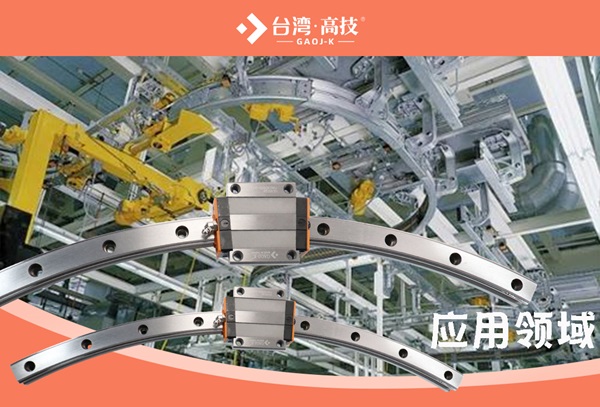
Engineers often find that curved guide rails with the same material and precision feel completely different when the slider passes through. Curvature radius is not just a dimensional parameter — it determines load distribution, motion behavior, and long-term stability.
Small Radius = High Centrifugal Force
A smaller radius increases centrifugal force, unbalancing contact load on rolling elements. Local stress rises, rolling resistance grows, and smoothness degrades. The effect is stronger at higher speeds.
Cage Interference
When radius drops below the cage flexibility limit, the cage scrapes the rail sidewall. Rolling elements tilt and slide instead of rolling purely, causing periodic stuttering and accelerated cage wear.
Differential Slip and Spin
Inner and outer rolling elements travel different arc lengths. If the radius is too small, slip exceeds compensation range, causing violent spinning, energy loss, vibration, and track wobble — plus premature fatigue of rolling elements.
Wedge Self-Locking
Below the critical radius, rolling elements wedge into the gap between slider and rail. More thrust only locks them tighter — the slider jams completely in the arc and requires disassembly to recover.
Bottom line: Match curvature radius to actual operating speed during selection to avoid stuttering, jamming, and irreversible rail damage.
(Source: Production line statistics and industry selection handbooks)