


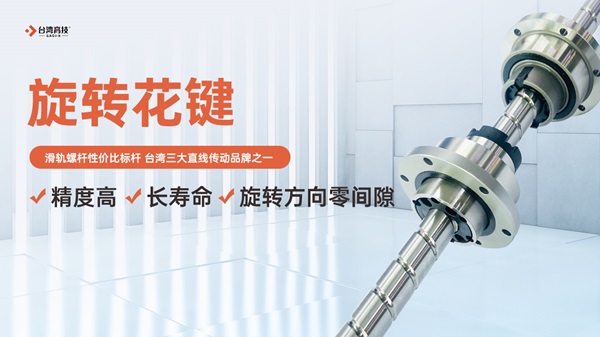
Many field operations and maintenance personnel, when handling rotary spline lubrication maintenance, tend to copy the maintenance intervals of general-purpose components without making differentiated judgments based on actual operating speed. As a result, grease often fails prematurely at high speeds, while excessive maintenance and waste occur at low speeds. In fact, the lubrication maintenance interval of rotary splines under different speed conditions cannot rely solely on a single operating-distance baseline. Instead, it should be judged in differentiated segments according to grease state changes and oil-film retention capacity caused by speed.
-
Under low-speed heavy-load or micro-motion stroke conditions, it is difficult to form a complete oil film between the rolling elements and raceways, and fretting wear is likely to occur. In this case, the maintenance interval should focus on the anti-fretting wear performance of the grease and regular full-stroke run-in, rather than being judged solely by operating distance.
-
In the medium-speed conventional operation range, the baseline operating distance given by the equipment manufacturer can be used as the initial maintenance node, but it must be supplemented by grease appearance inspection. Once the grease is found to be blackened, dried out, or hardened, replenishment or replacement should be carried out in advance.
-
Under high-speed continuous rotation conditions, the throwing-out effect of centrifugal force on grease and churning heat will significantly accelerate base oil bleeding and oxidative deterioration. At this time, the distance baseline becomes invalid. The inspection interval should be shortened, with emphasis on monitoring bearing temperature and vibration trends, and condition monitoring should replace fixed cycles.
-
For conditions that cross critical speeds or involve frequent speed changes, speed fluctuations will aggravate the instability of the tooth-surface friction coefficient. Maintenance judgment should introduce vibration spectrum analysis, pay attention to sub-synchronous whirl characteristics caused by lubrication failure, and dynamically adjust the greasing timing accordingly.
-
Regardless of the speed range, if the equipment has a smart maintenance prompt function, the lubrication recommendations generated by the system based on the actual load spectrum and operating time should be given priority. Manual condition inspection should be used as an auxiliary verification method, forming a dual judgment logic of “system warning + on-site confirmation.”
In summary, by taking speed conditions as the core dimension for judging lubrication maintenance intervals and breaking away from uniform maintenance inertia, it is possible to control O&M costs while keeping rotary splines in stable operation for a long time.