


The positioning accuracy of dual-rail synchronous modules relies on balanced force bearing on two guide rails. Once tension mismatch occurs, friction and inertial response on both sides become unbalanced immediately, resulting in asymmetric movement speeds during forward and reverse travel.
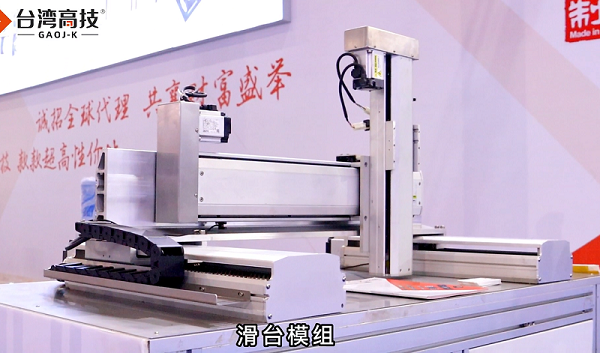
-
In dual-rail synchronous modules, inconsistent initial tension settings or assembly preload of the two guide rails create inherent differences in contact stiffness between moving pairs. Uneven rigidity leads to dissimilar response speeds under identical driving force, laying a fundamental asymmetric source for bidirectional travel errors.
-
-
During forward travel, the rail with higher tension imposes tighter constraints on the sliding block, causing more obvious lag in dynamic response; the loosely tensioned side delivers better follow-up performance. Continuous displacement differences accumulate during movement, generating deflection torque on the slider and further aggravating inconsistent speed response.
-
When the module reverses direction, the tension status of both sides switches. The originally tight rail suddenly unloads while the slack rail bears sudden load. This abrupt tension shift triggers instantaneous speed oscillation. Due to asymmetric mechanical clearances and elastic recovery, speed deviation at the start of reverse motion is greatly amplified, with errors opposite to those in forward travel.
-
-

-
-
Follow-up errors accumulated in forward and reverse directions point to opposite sides, forming an open deviation band for reciprocating positioning at the same target coordinate. Each full travel cycle widens the deviation band under repeated uneven tension, creating a cycle amplification mechanism driven by bidirectional speed differences.
-
-
Deflection torque from uneven tension generates a tiny yaw angle of the slider on the moving plane, resulting in unequal actual travel lengths on both sides. Under long-stroke reciprocating operation, such geometric path differences non-linearly convert speed gaps into position deviations. The yaw angle reverses upon direction switching, worsening bidirectional positioning discreteness.
-