


During equipment commissioning, guide rails, screws, and motors are often repeatedly verified, yet precision still fails to meet expectations, and axial play repeatedly appears without a root cause being found. Many engineers focus troubleshooting on components at the end of the transmission chain, but often overlook the core link of screw support seat preload matching. This leads to repeated disassembly and debugging without solving the fundamental problem. Only by matching the logic of preload adaptation with the control requirements for axial play can precision be locked from the source of the transmission chain and ineffective repeated debugging be avoided.
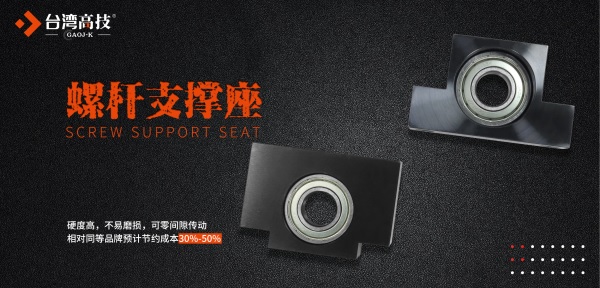
Screw support seat preload matching is the most easily overlooked link in precision and play control: when preload is insufficient, clearance exists between the bearing and the support seat, axial play is directly amplified, and positioning precision drifts accordingly; when preload is excessive, raceway contact stress rises sharply, heat and wear intensify, and precision deteriorates with temperature rise instead. The core of matching is to make support seat stiffness, bearing clearance, and load conditions match one another, rather than pursuing a single indicator in isolation.
1.Measurement before assembly: Before assembly, measure the actual fit between the support seat bore and the bearing outer diameter, and judge whether preload is truly transmitted in place by contact uniformity, avoiding locking it based only on feel or experience.
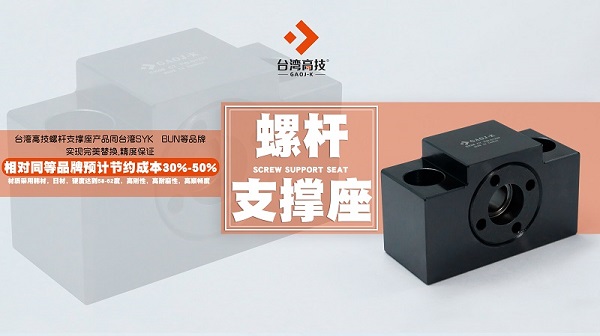
3.Synchronous calibration of datum surfaces: The mounting datum surfaces of the support seat, screw, and guide rail must be calibrated synchronously. Changes in preload will affect the force distribution of the entire transmission chain, and single-point adjustment often introduces new offset loads.
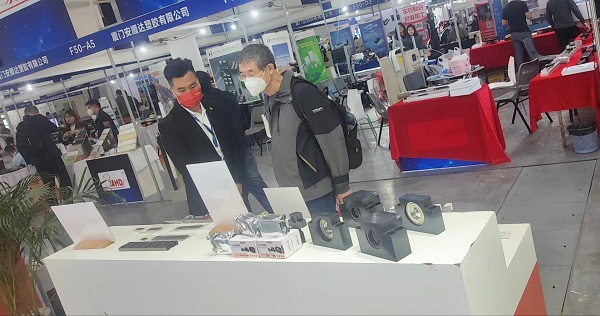
After verification of preload matching is completed, axial play during equipment operation will be stably controlled within a reasonable range, and the positioning precision and long-term operation stability of the whole machine will be significantly improved. Subsequent regular simple spot checks of preload status can avoid repeated precision drift caused by preload failure, allowing the transmission system to maintain a stable service state over the long term.