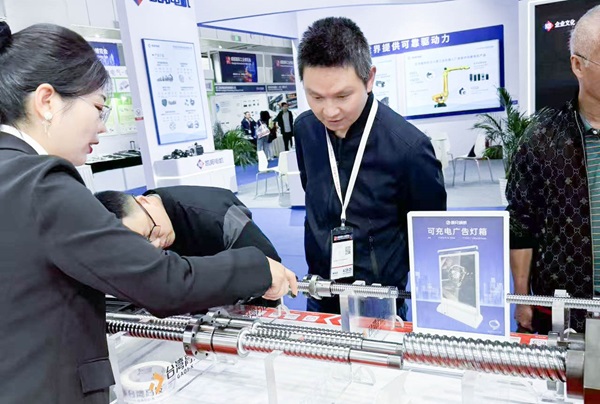


The selection of ball screw preload has always been a core part of working-condition adaptation in transmission systems. Different preload structures directly determine the precision stability and service life of equipment in different scenarios. Only by clarifying the adaptation logic of single-nut and double-nut preload can the performance of transmission components truly match on-site requirements.
Single-nut preload has a compact structure and is cost-friendly, making it suitable for medium and light loads and working conditions with limited space. It achieves preload by increasing the steel ball size or offsetting the lead. Its rigidity is sufficient, but the adjustment margin is limited. It is more common in automation modules that are sensitive to installation dimensions.
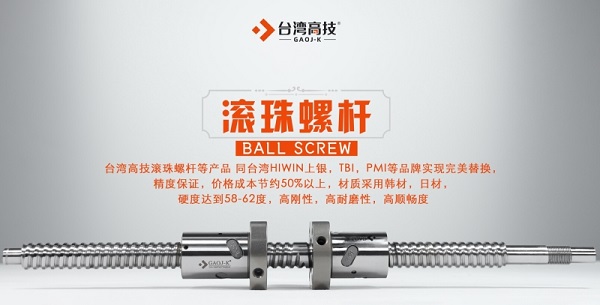
Double-nut preload establishes preload force through the relative displacement of two nuts. Its initial rigidity is noticeably higher, making it suitable for heavy cutting, bidirectional loading, or scenarios with strict positioning precision requirements. However, its axial dimension is longer and its structure is more complex, so sufficient space must be reserved for the nut housing during selection.
There is no absolutely optimal preload structure, only the choice that best fits the working conditions. By matching the equipment's precision requirements, operating rhythm, and maintenance conditions, the ball screw can maintain stable transmission performance over the long term and avoid unnecessary performance redundancy and loss.
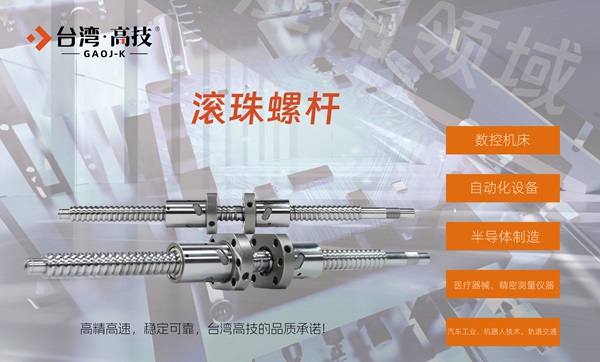
If the equipment requires both precision and installation space, priority can be given to evaluating GAOJ-K's screw series. Its product line covers both single-nut and double-nut structures, and preload grades can be matched to working conditions. For occasions requiring later fine adjustment of preload force, the double-nut solution also has an advantage in operational convenience.
During selection, there is no need to blindly pursue double nuts. A single nut is often more economical for light-load high-speed shafts; for heavy-load high-rigidity shafts, it is worth reserving space for the stiffness performance of double nuts. GAOJ-K has corresponding models for both types of structures, making it convenient to make trade-offs based on actual loads and dimensional constraints.