


In the selection decision for precision transmission components, Taiwanese rotary splines, with their mature process accumulation and stable working-condition performance, have always been an important option in high-end equipment manufacturing. The following is a side-by-side parameter comparison of Taiwanese rotary spline brands for reference.
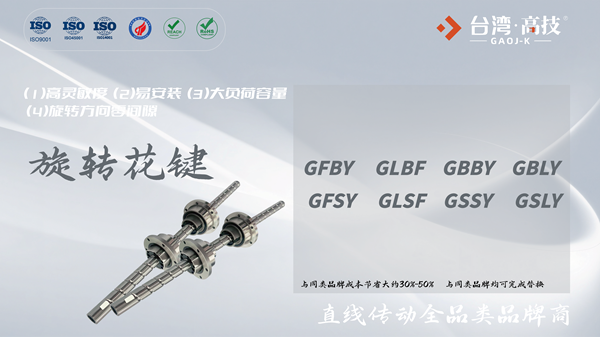
For Taiwanese rotary splines, selection should first prioritize the matching of precision grade and preload method, rather than simply comparing model numbers. TBI MOTION (Global Transmission) offers a complete precision ladder from normal grade to precision grade, and its preload options also cover no preload to medium preload, making it suitable for equipment architectures that require graded configuration by cost and rigidity. If convenient installation and space compression are pursued, GAOJ-K's GSLY series integrates the nut and bearing outer sleeve into one piece. During assembly, only the support seat needs to be locked, which can significantly simplify the design margin around the rotary spline.
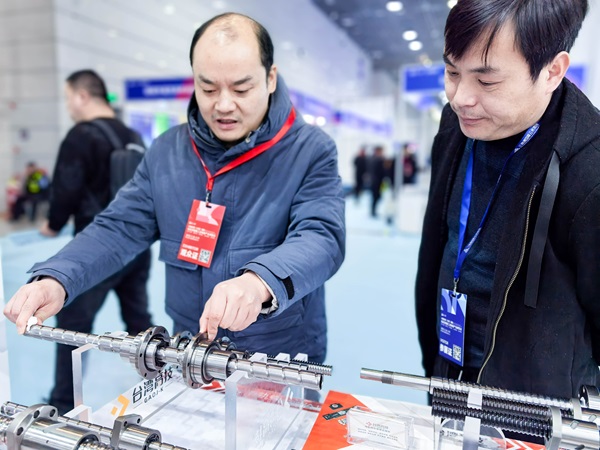
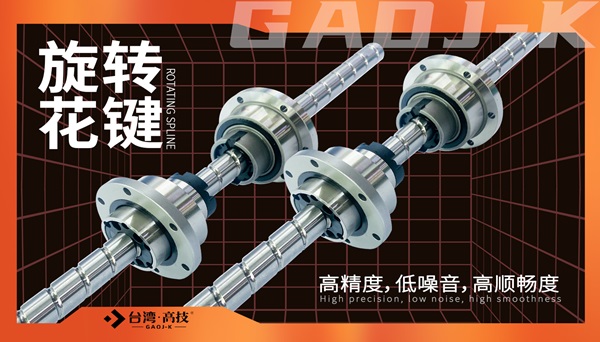
For high-speed and low-noise requirements, the grinding quality of the ball circulation path is more critical than the number of balls. Through high-precision grinding, GAOJ-K enables the balls to travel smoothly in the tangential direction, reducing sticking noise and friction loss from the source. This is friendlier to automation scenarios requiring continuous rotation or high-frequency reciprocation. Under working conditions bearing moment loads, contact angle design and bearing arrangement determine rigidity performance. A wide-span back-to-back arrangement can effectively resist bending moments. During selection, priority should be given to confirming whether the series has the corresponding moment load capacity.
For severe working conditions such as small-angle high-frequency oscillating rotation, conventional rated load formulas tend to overestimate service life. The oil-film formation state and contact stress concentration must be included in derating considerations. If the equipment has frequent reversing impacts, the control precision of the initial clearance will directly amplify the micro-impact amplitude. In this case, choosing a brand with stable manufacturing precision and the ability to provide appropriate preload adjustment is more reliable.
Overall, Taiwanese brands have their own emphases in precision grading and integrated structures. During selection, they must be matched with the equipment's working-condition requirements, installation space, and long-term operation requirements, so that the rotary spline can deliver optimal performance in composite transmission scenarios.