


In the continuous operation scenario of packaging and sorting conveyor lines, the operating state of long-span multi-station timing belt modules directly determines the smoothness of material conveying and the matching precision of sorting actions. For the synchronization control of long-span multi-station timing belt modules in packaging and sorting conveyor lines, it is necessary to break down the solution into four levels: mechanical architecture, drive configuration, control strategy, and operation and maintenance adaptation.
1.Base rigidity: Under long spans, base deflection and belt vibration cannot be compensated by servo gain. During selection, priority should be given to confirming the one-piece forming process of the aluminum profile base and the embedded guide rail structure, so as to provide a stable physical datum for subsequent multi-station synchronization.

2.Dual-rail multi-slider instead of multiple parallel axes: Independent drive sliders are mounted on a single long rail, sharing the same datum guide rail and each having its own servo power source, structurally eliminating the cumulative parallelism errors of multiple axes.
3.Belt tension: Thermal elongation and tension decay over long spans will slowly drift positioning accuracy. Tension monitoring and periodic homing verification should be reserved.
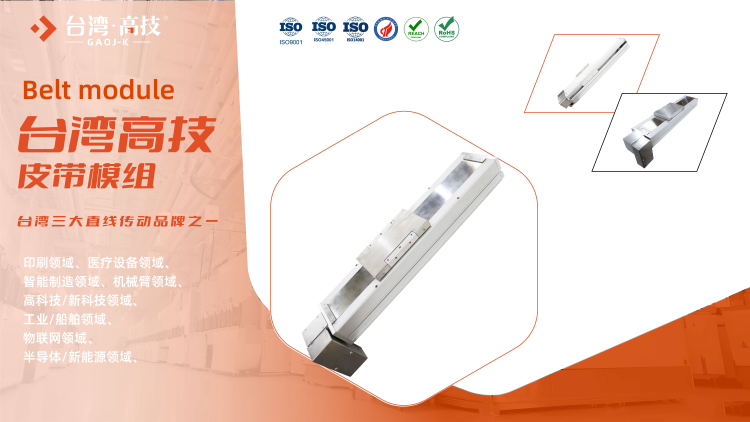
4.Sorting takt: Each station slider waits in the standby area and follows the main line in hot standby. After being triggered, it cuts into synchronous following to execute the action, and then returns autonomously without dragging down the overall line takt. This avoids individual station action delays slowing down the entire line.
5.Dust protection and maintenance: Packaging workshops often contain paper scraps and dust. Once dust accumulates on the back of the module belt, slipping and abnormal noise are likely to occur. In this case, a semi-enclosed structure combined with a special steel belt dust cover should be preferred to avoid sorting misalignment followed by shutdown troubleshooting.
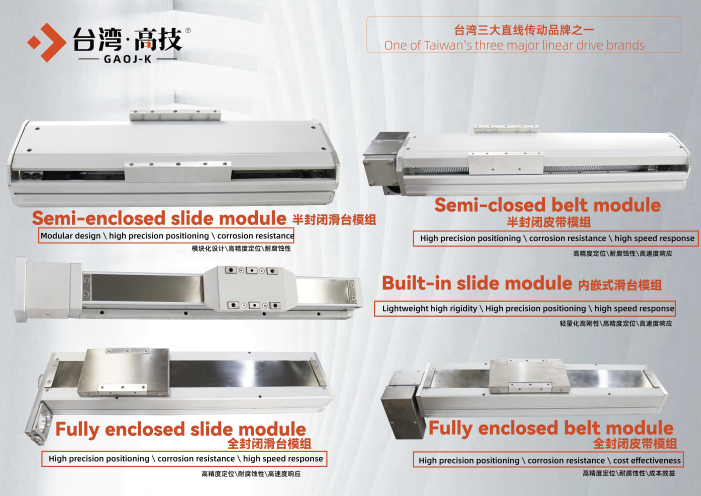
Once the above synchronization control scheme is running smoothly, the long-span multi-station coordination of the entire packaging and sorting conveyor line no longer requires repeated takt adjustment, and daily operation and maintenance are also much less troublesome.