


Axial play is a core factor that directly affects the positioning accuracy and running smoothness of the whole machine, and the locking structure of the support seat directly determines the final upper limit of play suppression. Different locking methods show obvious differences in dimensions such as preload maintenance, resistance to vibration conditions, and compensation for thermal deformation.
The suppression effect of the screw support seat on axial play first depends on the bearing configuration inside the fixed end. Angular contact ball bearings paired according to a specific contact angle combination can simultaneously bear bidirectional axial loads, limiting the axial displacement of the screw from the structural source.
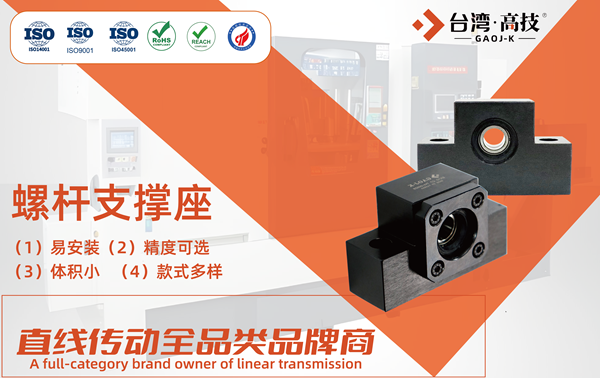
The tightening method of the lock nut directly determines the stability of the preload state. If it is too loose, the axial clearance will not be eliminated; if it is too tight, the bearing preload will be excessively consumed, aggravating heat generation and wear.
After the axial lock nut is tightened, its radial set screw must be locked only after confirming that the installation state is correct. Once the lock nut undergoes angular deviation due to vibration, the bearing preload will decay accordingly, and axial play will gradually increase. Therefore, thread-locking adhesive can be used when necessary to prevent slight retraction of the nut caused by equipment operation vibration.
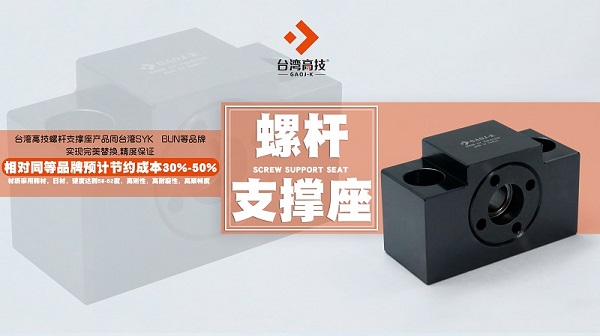
The support-side bearing and the shaft must maintain a clearance or floating fit, allowing the screw to expand and contract freely in the axial direction, and concentrating the play that needs to be suppressed at the fixed end, so that the suppression efficiency of the locking structure is maximized. If both sides are rigidly locked, the thermal elongation of the screw will have nowhere to be released, causing the fixed-end bearing to bear additional axial force, which will accelerate preload failure.
The preload adjustment of the bearings inside the support seat needs to be completed before leaving the factory. On-site installation then does not require disassembly or readjustment of the bearing set, avoiding the risk of damaging the preload state due to insufficient cleanliness of the assembly environment or differences in tightening methods.