

Precision drift of ball screw modules after long-term reciprocating use is often caused by micro-wear of ball raceways, preload relaxation, thermal deformation, contaminant ingress, and other factors. Under the same preconditions of load, stroke, lubrication, and conventional workshop environment, what are the differences in long-term reciprocating precision decay among major brands? Let us take a look below.
-
HIWIN: There is almost no decay during run-in, and precision retention is strongest during the stable period. However, its preload is difficult to adjust on site; once wear creates clearance, basically only replacement is possible. Dust and offset loads quickly accelerate decay. It is suitable for semiconductor, optical inspection, and precision inspection stations.
-
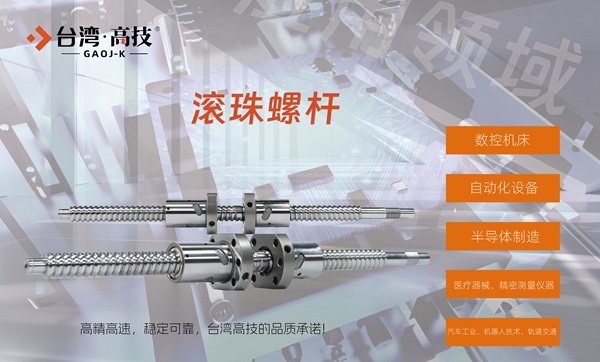
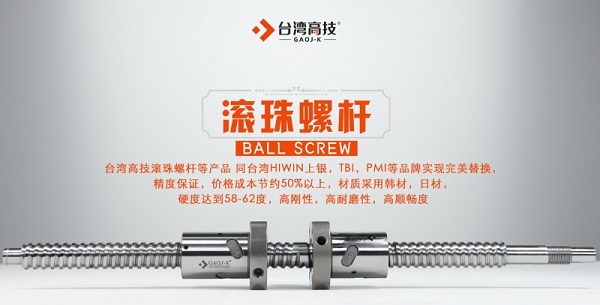
Taiwan GAOJ-K: There is a slight drop during new-machine run-in, and decay during the stable period is controllable. The highlight is that the nut supports on-site fine preload adjustment; after wear, adjustment can restore precision and delay decay. It is suitable for 3C, lithium battery, and medical automation replacement selection.
-
PMI: Balls with a retainer produce low friction heat, and decay during the stable period is gradual. Under clean working conditions, its long-term precision retention is the most outstanding. However, the preload adjustment margin is limited; once the inflection point is crossed, decay increases noticeably. It is suitable for cleanroom, medium-to-high-load medium-speed positioning.
-
TOYO: The integrated profile datum provides good factory consistency and stable transfer under conventional takt. However, under high-frequency reciprocating impact conditions, long-term vibration causes cumulative micro-shift of the assembly datum, and the decay slope rises明显 in the later stage. It is suitable for electronic plug-in and multi-axis manipulators.
Precision decay of any brand is not a fixed value. Lack of lubrication, dust, poor installation coaxiality, and long-term offset loads will all trigger accelerated wear in advance. It should be noted that for important projects, aging tests are recommended to collect decay data matching actual working conditions.