


The imaging quality of CT scans is directly determined by the stability and positioning accuracy of arc motion. Pulsation interference from conventional drive systems will cause geometric deviation of projection data and further lead to reconstruction artifacts. To achieve ultra-low pulsation arc motion, coordinated optimization shall be conducted from three aspects: drive source selection, transmission chain stiffness matching and control algorithm compensation, so as to meet the strict requirements of clinical high-resolution imaging.
-
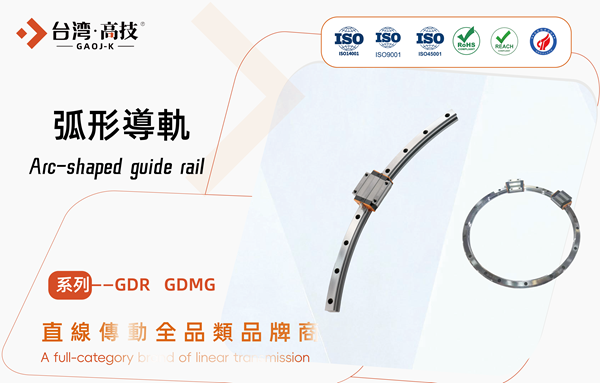
Optimization of Preload and Clearance Matching for Arc Guide Rail
Accurately match the preload of the guide rail and the clearance of rolling elements to eliminate slight movement caused by gaps. Distribute contact stress evenly along the arc length, and effectively restrain velocity pulsation resulted from periodic gap changes, laying a solid foundation for stable operation.
-
-
Suppression of Torque Pulsation in Drive System
Adopt motors with low cogging torque and high-resolution encoders to realize closed-loop control and eliminate backlash of the transmission chain. Arrange the drive point near the center of mass of moving parts to reduce torsional vibration caused by unbalanced driving torque and stabilize instantaneous velocity.
-
-
-
-
Low-disturbance Path Design for Flexible Cables
Select highly flexible flat cables and optimize the bending radius of cable drag chains to keep constant bending resistance along the tangential direction. Install elastic buffer components to absorb random friction interference between cables and prevent instantaneous creeping during arc scanning due to sudden resistance changes.
-
-
Anti-disturbance Strategy for Lubrication and Sealing
Apply lubricants or solid coatings with good boundary lubrication and low viscosity to avoid stick-slip at low speeds. Adopt non-contact magnetic fluid seals to prevent particle intrusion and rolling element stagnation, and maintain stable pulsation amplitude of arc motion during long-term operation.
-