


Uneven support heights at both ends of the ball spline seem to be only tiny deviations of the mounting datum, yet they trigger a series of error multiplication effects under compound motion conditions. The height difference tilts the spline shaft during rotation, concentrating loads on a small number of teeth instead of distributing them evenly across all tooth surfaces.
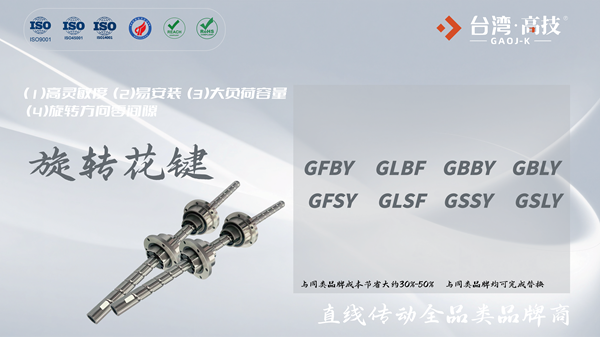
Research on spline position errors shows that coaxiality deviation severely disturbs the clearance distribution of non-centering surfaces, virtually reducing the effective contact teeth to half or less of the theoretical quantity. These overloaded teeth bear several times the designed compressive stress. During reciprocating rotation, high-frequency tiny relative sliding occurs on tooth surfaces, breaking the lubricating oil film repeatedly. Metal asperities stick, shear and peel off, generating oxidized abrasive particles. Abrasive wear and fretting wear take turns to dominate, accelerating the wear rate non-linearly.
Uneven support heights create additional bending moments under compound motion, forming a spatial angle between the spline axis and the theoretical rotation center. Coaxial errors are periodically stimulated per revolution and amplified non-linearly in various motion coupling stages.
Unbalanced load distribution caused by asymmetric supports generates gradient contact stress along the axial direction of spline teeth. Amplified coaxial errors further boost local stress peaks under compound motion, triggering repeated plastic shear and rebound of micro tooth surface materials and accelerating fatigue spalling.
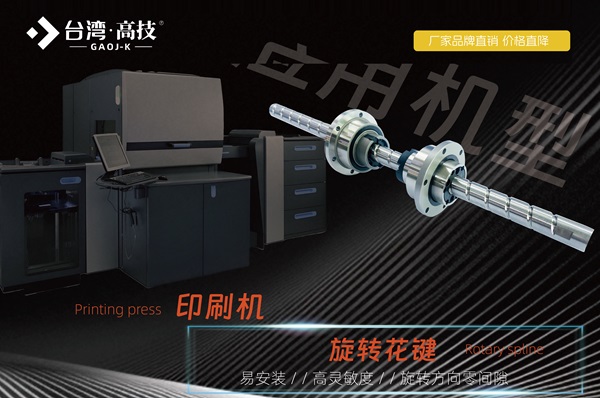
Periodic eccentric loads from uneven supports alter the dynamic meshing clearance of spline pairs. Coaxial errors surge instantly during reciprocating commutation, bringing alternating impact and sliding on tooth flanks. Accumulated wear debris forms a secondary enhancement loop of abrasive wear.