


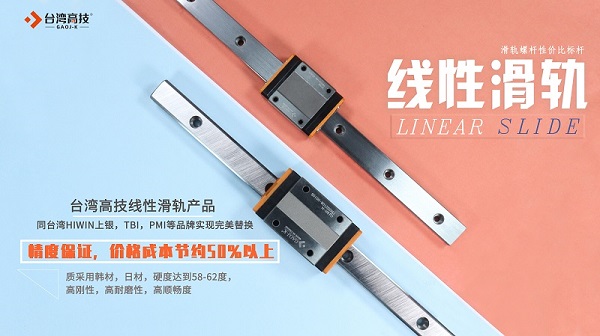
Heavy-duty industrial machines demand high load capacity, vibration resistance and long-term precision. High-mount linear guides feature thickened rails and reinforced sliders, with extra space for lubrication, sealing and thermal expansion, effectively reducing deformation and wear under continuous heavy loads.
-
Superior Rigidity & Load Bearing Capacity
High-mount linear guides feature thicker sliders and rail bodies with reinforced circulating paths for rolling elements. They evenly disperse massive contact stress generated by heavy cutting forces or large tonnage pressure, resulting in minimal elastic deformation under heavy loads—an advantage that lightweight low-mount structures cannot match. -
-
Compensation for Installation Base DefectsThe mounting surfaces of heavy-duty equipment often carry manufacturing errors or minor deformation after long-term service. High-mount guides come with thicker rail bases and taller mounting shoulders, allowing fine calibration via large-size compression blocks or adjustment wedges. Even under poor installation conditions, uniform force distribution on sliders can be guaranteed.
-
Vibration Resistance & Stable Operation
Heavy-load applications frequently generate strong vibration from intermittent cutting or eccentric loads. The high-mount design increases the mass ratio and contact damping of the rail pair, efficiently absorbing high-frequency impact energy and greatly lowering resonance risks. It protects machine spindles and cutting tools while improving the surface finish of workpieces.
-
-
-
-
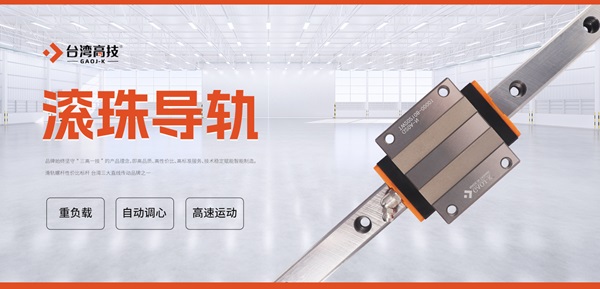
Extra Margin for Lubrication & Sealing
Under low-speed heavy-load operation, oil film breakdown and contaminant intrusion are common problems. High-mount guides adopt wider lubrication channels and ample space for large-capacity wiper seals. They maintain sufficient boundary lubrication even with insufficient lubricant supply or dusty workshop environments, extending maintenance intervals.
-
-
Adaptive Space for Thermal Deformation
Prolonged operation of heavy-duty equipment creates significant frictional temperature rises on lead screws and guide rails. High-mount structures reserve abundant axial and radial clearances for thermal expansion. Sliders maintain full contact with raceways during thermal displacement, eliminating high load or precision loss caused by thermal jamming.
-
-
Long-Term Precision Retention
High-mount linear guides are manufactured with high-grade steel and deep raceway hardening processes, featuring generous wear allowance on raceways. Under continuous rated dynamic loads, this structure delays fatigue spalling. The equipment retains original positioning accuracy after tens of thousands of heavy-load cycles, cutting downtime losses from frequent guide replacements.
-