


The ball screw market presents a pyramid-shaped segmented landscape. Japanese and German brands dominate the high-end segment, Taiwanese brands capture most of the mid-range market share, while Chinese mainland brands are rapidly catching up in the low-to-mid-end market and expanding into high-end sectors.
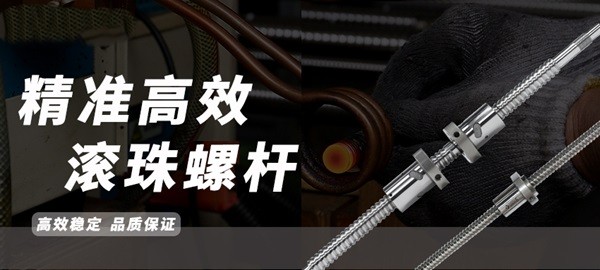
Representative Japanese brands include THK, NSK and Kuroda Precision, and Bosch Rexroth stands for German brands, jointly controlling the global high-end ball screw market. As a pioneer in the ball screw industry, THK provides a full range of positioning ball screws, transport ball screws and rotary nut ball screws, widely adopted in semiconductor manufacturing equipment and industrial robots. Leveraging its synergistic bearing technology, NSK boasts strong competitiveness in precision mechanical parts. As a global leader in linear motion and assembly technology, Bosch Rexroth delivers premium products at a relatively high price.
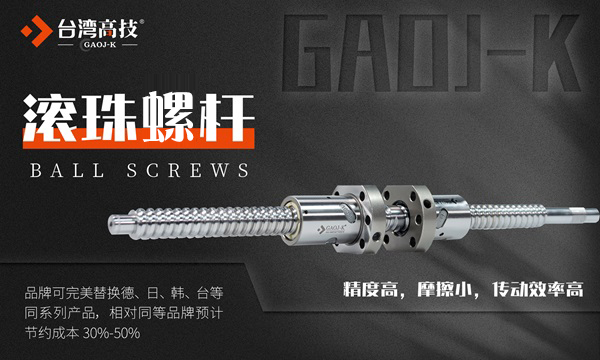
Taiwanese brands are led by HIWIN, PMI, GAOJI and TBI MOTION, occupying a vital position in China’s ball screw market. HIWIN and PMI together account for over a quarter of the market share of screws and linear guides. GAOJI is a rising Taiwanese brand featured by comprehensive product lines, yet it still lags behind established Taiwanese players HIWIN and PMI in market share and brand awareness. Taiwanese brands generally feature complete product portfolios, outstanding cost performance and shorter lead times compared with Japanese brands, gaining wide acceptance in general machine tools and electronic manufacturing equipment.
Nanjing Technology Equipment Manufacturing is a leading domestic manufacturer of rolling functional components in Chinese mainland. Although domestic brands have achieved remarkable progress in technical indicators, gaps remain versus leading Japanese and Taiwanese brands in ultra-precision processing consistency, long-term reliability verification and brand accumulation.
Market feedback indicates no absolute superior or inferior among brands of different tiers; they only differ in applicable scenarios. Top-tier imported brands remain the mainstream choice for scenarios demanding extreme precision and long-term stability. Taiwanese brands deliver balanced overall performance for mid-range automation scenarios requiring cost performance and versatility.
Domestic brands stand out with localized strengths including fast delivery and customized services for cost-sensitive projects. Manufacturers can select the most suitable products based on precision requirements, load conditions, budgets and delivery cycles.