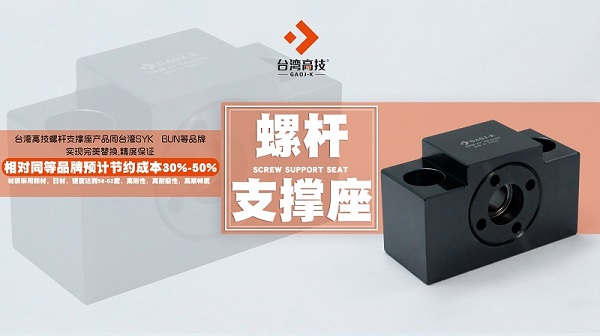


Under low-temperature freezing conditions, hidden failures of equipment transmission components often do not originate from load overload, but from performance mismatching between lubrication media and structural parts under extreme temperature changes. The following explains the matching logic for bearing grease and spacer ring materials inside the support seat.
Base oil selection for grease. Grease based on synthetic hydrocarbon or ester oil must be prioritized to ensure that an effective oil film can still be formed in the freezing range, without solidification or excessive thickening, and to maintain a low starting torque.
Thickener system matching. Lithium-based or complex soap thickening systems should be adopted so that the grease maintains structural stability at low temperatures and avoids lubrication failure caused by thickener crystallization or hardening.
Chemical compatibility between spacer ring material and grease. Spacer rings should avoid copper or copper alloy materials when used with grease containing active sulfur or corrosive additives, so as to prevent precipitates at low temperatures from causing corrosion on the spacer ring surface.
Spacer ring material selection for synthetic hydrocarbon base grease. When the grease uses polyalphaolefin as the base oil, the spacer ring can be made of low-carbon steel or martensitic stainless steel with a low-temperature-stabilized surface treatment, balancing dimensional stability and corrosion resistance.
Spacer ring material selection for extremely low-temperature scenarios. Austenitic stainless steel or polymer materials should be adopted for the spacer ring, using their low thermal expansion coefficient and good compatibility with synthetic base oils to reduce jamming or grease being squeezed out of the contact area caused by shrinkage differences.
Surface condition control of the spacer ring. The surface roughness of the spacer ring should be similar to that of the bearing ring, avoiding porous or rough surfaces that excessively adsorb base oil at low temperatures and accelerate grease hardening failure.
Compatibility verification before assembly. It must be confirmed that the grease and spacer ring material have completed a compatibility test, observing whether the spacer ring discolors, whether the grease undergoes oil separation and hardening, or whether adhesion decreases after low-temperature standing.
In deep-cold operation scenarios, only by synergistically matching the low-temperature flowability and shear stability of the grease with the low-temperature dimensional stability and impact resistance of the spacer ring material can the screw support seat maintain stability during long-term low-temperature start-stop and continuous operation, avoiding jamming, abnormal noise, and precision drift.