


Under clean food spray conditions, continuous water vapor flushing and contact with disinfecting media can easily cause corrosion, seal failure, and other problems in guide rails. Many equipment failures and hygiene risks originate from the fact that the early-stage matching of base materials and sealing components did not fit the actual on-site working conditions.
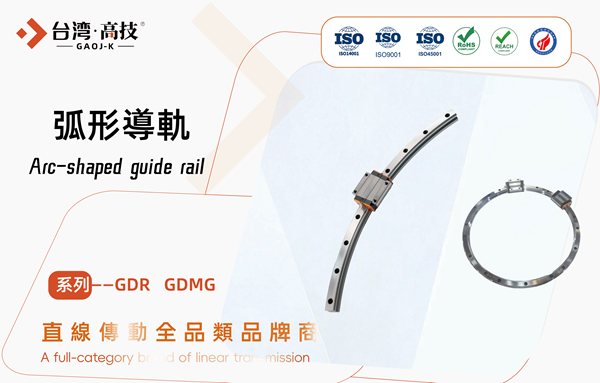
-
Under clean food spray conditions, the base material of curved guide rails should preferably be stainless steel rather than carbon steel with a coating. Spray water continuously erodes weak points of the coating. Once the coating is damaged, the carbon steel substrate rusts rapidly and spreads contamination risk to the food area.
-
If carbon steel substrate must be used due to cost or machinability limitations, the surface must undergo a composite treatment of low-temperature electrolytic black film plus fluororesin coating. The black film ensures that bonding strength and precision are not affected, while the fluororesin layer isolates water vapor and cleaning agents. Both are indispensable.
-
The seal ring material must simultaneously meet the dual conditions of food-contact compliance and resistance to spray cleaning agents. EPDM performs stably in hot water, steam, and alkaline cleaning liquids and contains no plasticizer extractables, making it a reliable choice for spray conditions.
-
If oily food media or non-polar cleaning components exist in the working conditions, EPDM has limited resistance. In this case, food-grade fluororubber materials should be used instead, as they balance resistance to both polar and non-polar media.
-
PTFE sealing material is extremely chemically inert and resistant to almost all cleaning media, but its elasticity is poor. It must be combined with an elastic core to form a composite seal structure. Used alone, it cannot follow the eccentricity and vibration of curved guide rails.
In summary, no matter which seal ring is selected, it must be confirmed to hold food-contact compliance certification, because spray water will carry extractables from the seal ring surface into direct contact with food. Lack of compliance means the migration risk is uncontrollable.