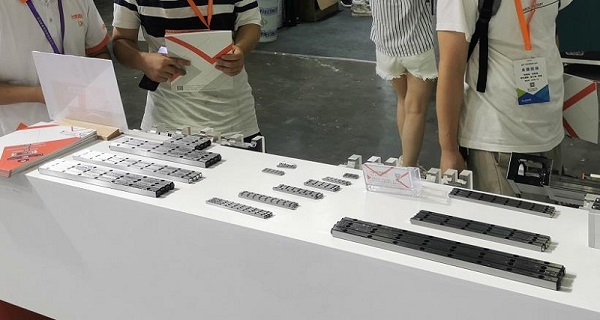


In many short-stroke, high-rigidity applications, it is only during the commissioning stage that equipment builders discover that the layout of crossed guides may seem like only an installation layout difference, but it actually directly affects the rigidity performance of the whole machine in terms of torsion resistance and impact resistance. If the adaptability boundary is not clarified during early selection, later adjustments often require modifying the base structure. Single-row and double-row layouts have no absolute advantages or disadvantages; only by combining them with working-condition load characteristics can an adapted solution be selected.
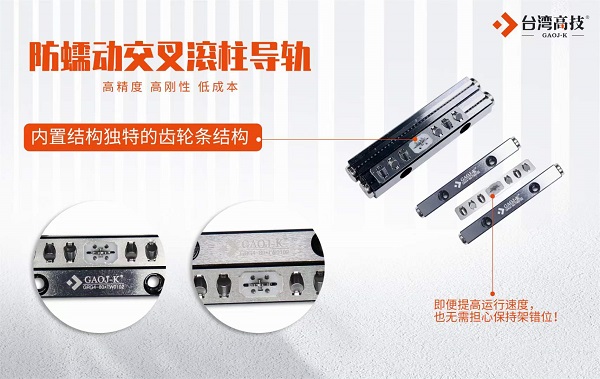
2.Double-row parallel assembly is a more suitable choice under high-rigidity conditions, and the core lies in the improvement of moment resistance. After two rows of crossed roller guides are assembled in parallel, the system not only bears loads in all directions but also effectively resists pitch and yaw moments generated by cantilever or offset loads. Although a single-row guide can bear four-direction forces, when facing eccentric cutting forces or heavy-load overturning tendencies common in high-rigidity conditions, the couple structure of the double-row layout can significantly suppress the angular displacement of the guide.
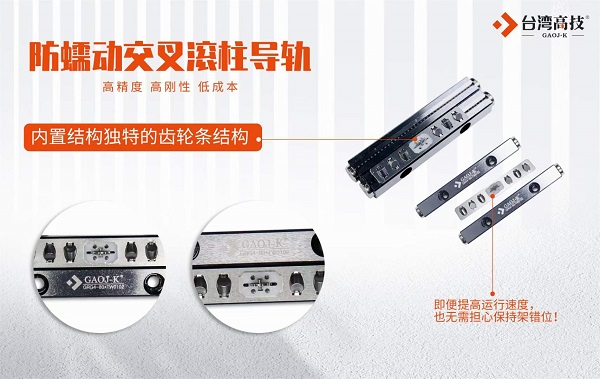
4.During selection, installation space and rigidity requirements must be weighed, and no generalization should be made. If the equipment structure is compact, the overturning moment is small, and four-direction load bearing is the main requirement, a single-row crossed guide can already meet high-rigidity requirements and occupies less space. However, whenever there is obvious offset load, a cantilever structure, or strict limits on angular stiffness in the working conditions, double-row parallel assembly is the reasonable solution to ensure that rigidity does not collapse.