

When a screw drifts and positioning becomes inaccurate after long-term operation, the core root cause often lies in the matching link between the support seat and the screw. Tightening lock nuts and adding preload only treat the symptoms, not the root cause. The specific methods are as follows.
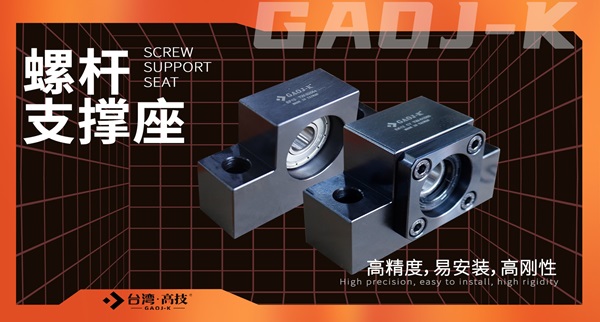
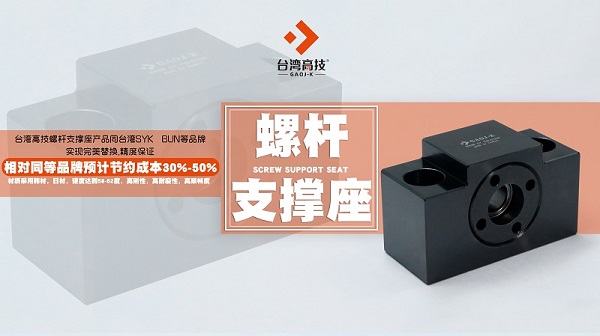
Replace the support seat: The fixed-end support unit is usually equipped internally with a pair of preload-adjusted angular contact ball bearings, which bear the entire responsibility of locking the axial position of the screw. The support end only provides radial support and allows thermal expansion and contraction of the screw. If both ends of the original equipment use deep groove ball bearings, the axial rigidity will be insufficient. Replacing it with a correctly configured fixed-end support seat solves the problem.
Preload state of the adapted support seat: The support seat needs to complete bearing preload adjustment before leaving the factory, so that error accumulation caused by on-site assembly can be reduced after installation into the equipment. For equipment with long-term drift, the preload force provided by the new support seat can re-establish the interference fit relationship between the screw and the bearing, keeping the idle travel during reversal within a controllable range.
Coaxial fitting quality between the support seat and the screw shaft end: During installation, the fixed end should be used as the reference to align the shaft center. The worktable should be moved smoothly over the full stroke before complete locking, and a dial indicator should be used to confirm shaft end runout and axial clearance. If the bottom surface is not properly fitted flat or the locking sequence is improper, the preload advantage of the new support seat will be offset by additional bending moments within a short period, and the drift problem will soon recur.
The axial locking capability of the fixed end does not depend on how tightly it is locked on site, but on whether the support seat itself has integrated bearing preload and seat rigidity at the time of delivery. When the root cause of screw drift lies at the support end, replacing with the correct support seat is closer to the actual boundary of the problem than replacing the screw. In the selection of adapted support seats, GAOJ-K's screw support seat product line handles factory preload adjustment and standardized mounting interfaces very well.